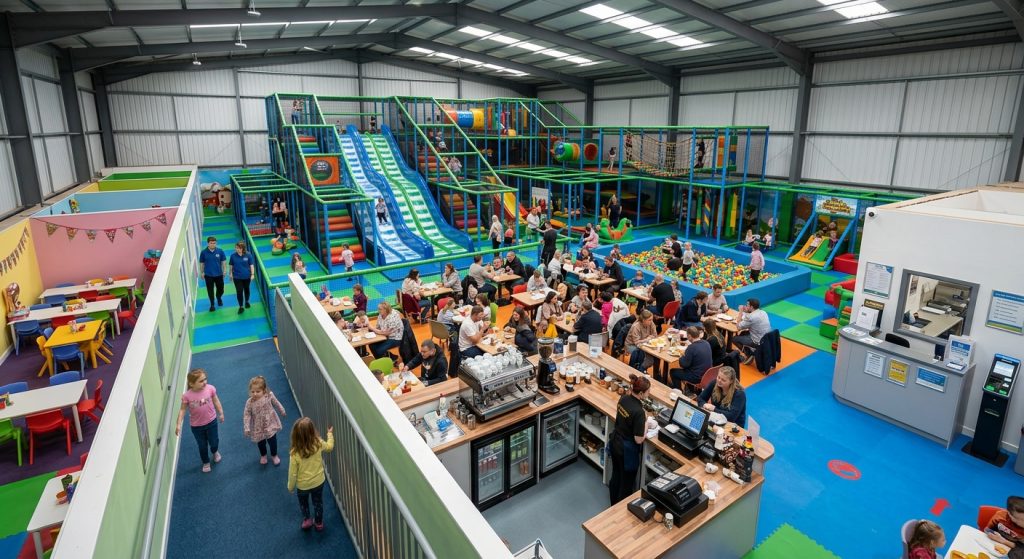







Financing an escape room or immersive entertainment venue usually means spreading the cost of set design, props, technology, and fit-out across a fixed monthly repayment, rather than paying the full build cost upfront. This keeps cash available for marketing and staffing in the crucial first months of trading, when a new venue is still building its booking volume. Johnson Reed arranges this type of funding for operators opening their first room or expanding an existing site into a multi-room attraction.
According to Allied Market Research, the UK escape room market was valued at an estimated $408.6 million in 2022 and is projected to reach $1.29 billion by 2032, representing a CAGR of 12.4% between 2023 and 2032. This growth reflects the increasing popularity of immersive entertainment, with operators expanding beyond traditional escape rooms to introduce VR experiences, immersive theatre and other technology-led attractions that encourage repeat visits and broaden their appeal.
Financing an Escape Room or Immersive Entertainment Venue from the Ground Up
A single escape room build typically involves far more than four themed walls and a lock system. Set construction, electronic props, sensors, lighting, sound design, and safety systems all add up quickly, and most new operators underestimate the total cost before getting quotes from a specialist set designer.
Multi room venues face a different challenge. Each additional room needs its own theme, its own prop budget, and often its own technical infrastructure, which means the second and third rooms rarely cost less than the first. Spreading that cost through structured finance lets an operator open with two or three rooms from day one, rather than launching with a single room and reinvesting profit slowly over several years.
Immersive entertainment venues that go beyond the traditional escape room format, such as VR arcades, interactive theatre, or hybrid bar and puzzle experiences, carry an additional layer of technology cost. Headsets, projection systems, and motion tracking hardware depreciate faster than a themed set, which makes financing particularly useful for keeping the technology current without a large repeat capital outlay every few years.
What Actually Drives the Cost of a Build?
Theme and narrative design typically account for a smaller share of the budget than most first-time operators expect. The bulk of the spend usually goes into carpentry, joinery, and the physical construction needed to turn an empty commercial unit into a sealed, soundproofed, and safely wired themed space.
Electronic puzzle mechanisms, whether custom built or bought from a specialist supplier, sit alongside the physical build as a separate and often underestimated cost. A single room can easily use a dozen or more sensors, relays, and hidden triggers, each of which needs wiring, testing, and a backup plan for when a prop inevitably fails mid-session.
Fire safety, emergency lighting, and accessibility requirements add a further layer of cost that is easy to overlook in early budgeting. Licensing officers and building control will expect clear emergency exits, illuminated signage, and a tested override system that lets staff release a group instantly if needed, none of which is optional regardless of how tight the opening budget is.
Ongoing costs matter just as much as the initial build. Props wear out, electronics fail, and popular rooms need refreshing every few years to keep repeat customers coming back, which is why many established operators treat a portion of their financing not just as a launch cost but as an ongoing reinvestment budget built into the business plan from day one.
Why Cash Flow Matters More Than the Build Cost?
New venues rarely open at full capacity. Booking volume tends to build over the first three to six months as word of mouth, reviews, and local marketing take effect, which means the business often carries its highest fixed costs during its lowest revenue period.
Paying for the full fit out in cash before opening can leave very little working capital for that ramp-up period, at exactly the point rent, staff wages, and marketing spend are all due regardless of how many bookings come in. Financing the build separates those two cost pressures, so the loan repayment sits alongside growing revenue rather than competing with it from day one.
Asset Finance and Themed Attraction Funding in Practice
Asset finance is well suited to immersive entertainment because so much of the venue’s value sits in physical, identifiable equipment. Props, animatronics, lighting rigs, and technology systems can all be financed against their own value, which often makes approval more straightforward than an unsecured loan of the same size.
Themed attraction funding structured this way typically ties the repayment term to the expected lifespan of the equipment, so a venue is not still paying for props that were replaced or retired years earlier. Operators expanding into a second location can also use asset finance to fund the new build without disturbing the working capital of the existing, already profitable room.
Planning for Growth Beyond the First Room
Operators who plan for expansion from the outset tend to negotiate better financing terms than those who return to a lender for a second, unplanned round of funding. A phased build, where the initial application covers both the first room and a clear plan for a second, gives a lender more confidence in the long-term viability of the business.
Corporate team building has become one of the strongest revenue streams for UK escape rooms, often filling weekday daytime slots that would otherwise sit empty around evening and weekend leisure bookings. Venues that design at least one room with larger group capacity in mind tend to capture more of this steady, higher-margin business than those built purely around small friend groups.
Seasonal demand also plays a role in planning. Escape rooms see strong bookings around school holidays, Halloween, and the Christmas period, and operators who invest in a rotating or refreshed theme for peak seasons often see a meaningful uplift in repeat visits from local customers.
Location choice interacts closely with financing decisions. High footfall retail or leisure districts command higher rent, which increases the pressure on early cash flow, while a slightly less prominent unit with lower rent can free up budget for a stronger opening theme. Lenders assessing an application will often look at the lease terms alongside the build cost, since a long, secure lease can support a larger loan by demonstrating the venue has time to build its customer base.
Staffing is another factor that is easy to underestimate when planning a launch budget. Game masters need training on every room’s puzzle logic and technical systems before a venue can safely run back-to-back sessions, and that training time represents a real cost even before the first paying group arrives. Building a modest staffing buffer into the financing plan, rather than assuming a skeleton crew from day one, tends to protect the customer experience during the busiest opening weeks.
Choosing the Right Funding Route
A finance calculator is a useful first step for estimating monthly repayments against a realistic booking forecast, before committing to a specific lender or loan size.
Operators with limited trading history, including those opening their first venue, may want to explore a dedicated start up loan designed around businesses that do not yet have several years of accounts to show a lender.
For venues built around technology-heavy experiences, such as VR or projection-mapped rooms, IT and technology finance can be a better fit than general business equipment finance, since it is structured around shorter refresh cycles for hardware.
Security and access control systems, including electronic locks, sensors, and monitoring equipment used throughout most escape room builds, can also be funded through dedicated security system finance rather than treated as a standalone cash purchase.
More unconventional or highly bespoke props and set pieces, the kind that do not fit neatly into a standard equipment category, are often better suited to quirky kit finance, which is built specifically around niche and nonstandard business assets.
Businesses planning a second site or a larger multi room expansion may also be eligible for government backed lending through the Growth Guarantee Scheme, which can complement equipment finance on bigger projects.
Summary and Next Steps
Financing an escape room or immersive entertainment venue lets operators open with a stronger offering from day one, rather than scaling back the theme, prop budget, or room count to fit available cash. With the UK market continuing to grow at double digit rates, the businesses that invest properly in set design, technology, and a clear expansion plan are best placed to capture that demand.
If you are planning a new escape room, VR venue, or immersive attraction and want to understand the funding options available, get in touch with the Johnson Reed team to talk through equipment finance, startup funding, and repayment structures built around your opening timeline.
Frequently Asked Questions
How much does it cost to open an escape room in the UK?
Costs vary widely depending on room count, theme complexity, and technology used, but most single room builds involve significant spending on set construction, electronic props, and safety systems before the venue can open. Multi-room venues cost proportionally more, since each room typically needs its own dedicated budget.
Can I get finance for escape room props and set design?
Yes. Props, set pieces, electronic locks, and technology systems can typically be financed through asset or equipment finance, spreading the cost across fixed monthly repayments rather than paying the full amount before opening.
Is asset finance better than a business loan for an immersive entertainment venue?
Asset finance is often a better fit when the funding is tied directly to identifiable equipment, such as props or technology systems, since the asset itself can support the application. A general business loan may suit costs that fall outside physical equipment, such as marketing or initial staffing.
How long does it take to become profitable after opening an escape room?
Most new venues see booking volume build gradually over the first three to six months as awareness and reviews grow. Financing the initial build helps operators maintain working capital through this ramp up period rather than relying entirely on early bookings to cover fixed costs.
Can I finance a second escape room location?
Yes. Many operators use asset finance or business loans to fund expansion into a second site, often without disturbing the cash flow of their first, already established venue.
What financing options exist for VR and technology-based immersive venues?
Technology-heavy venues, including VR arcades and projection-based experiences, are often better suited to IT and technology finance than standard equipment finance, since the repayment term can be matched to the shorter lifespan of hardware compared to physical set pieces.
Should I finance the whole build or only part of it?
Many operators finance the equipment, props, and technology while covering smaller costs such as marketing or initial stock from working capital. Splitting the funding this way keeps a cash reserve available for the unpredictable early months of trading, rather than committing every available pound to the physical build.