







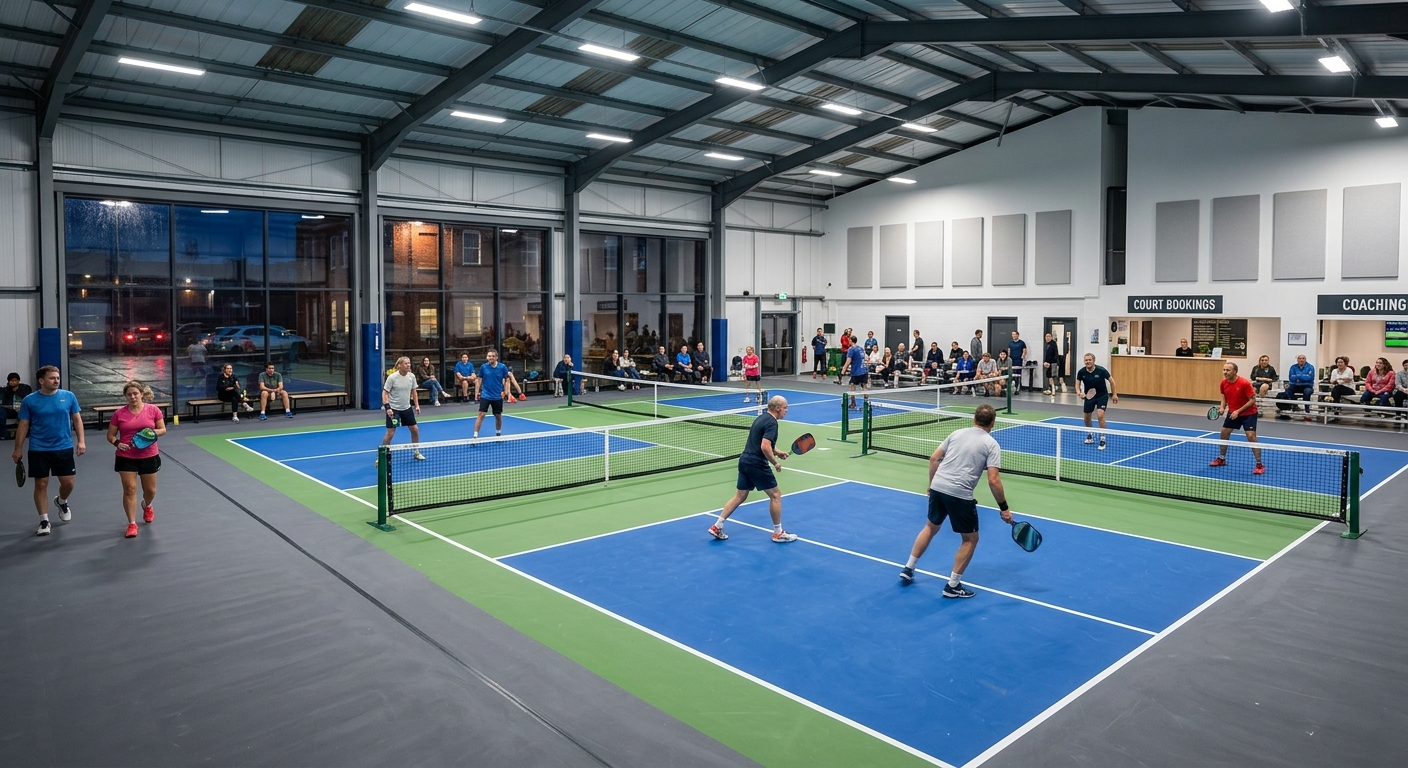
Pickleball has grown rapidly in the UK over the last few years, creating new opportunities for gyms, leisure operators, racket-sport clubs and entrepreneurs looking to open dedicated venues.But setting up a pickleball court business involves more than simply finding enough space for a few courts.You need to think about the premises, court installation, flooring, lighting, equipment, booking systems, staffing, marketing and how you are going to fund the initial investment.At Johnson Reed, we work with businesses across the sports and leisure sector, helping new and established operators finance pickleball courts, conversions, equipment and wider fit-out projects.This guide covers some of the main things to consider when setting up a pickleball business in the UK.
Finding the Right Site for a Pickleball Business
The premises will shape almost every other part of the project.Pickleball can be played indoors or outdoors, so the right option will depend on your business model, location and available budget.
Indoor venues offer the advantage of year-round play and can support evening sessions, coaching, leagues and events regardless of the weather.Outdoor courts may require a different level of initial investment, although operators need to consider seasonality, lighting, drainage and the impact of weather on bookings.
Potential premises could include:
- Existing racket-sport facilities
- Tennis clubs
- Leisure centres
- Converted warehouses
- Industrial units
- Existing gyms
- Multi-sport facilities
- Suitable outdoor sites
Converting an existing sports or commercial space can sometimes reduce the amount of structural work required compared with developing an entirely new venue.Before signing a lease or purchasing a site, it is worth working with your court supplier to make sure the space is suitable for the number of courts you want to install.
How Much Space Does a Pickleball Court Need?
A regulation pickleball court measures 20 feet wide by 44 feet long.However, the court lines themselves aren’t the only space you need.Players also require suitable run-off space around the court, and commercial venues need to consider walkways, seating, access between courts and spectator areas.That means the total floor area required will be considerably larger than the dimensions of the playing lines alone.Pickleball courts are smaller than tennis courts, which means existing racket-sport venues may be able to increase the number of playable courts within their available space, depending on the layout.
Getting the layout right from the beginning is important, particularly if you plan to run several games, coaching sessions or events at the same time.
Pickleball Court Installation and Surfacing
The courts themselves are likely to represent one of the main investments in a new pickleball venue.The exact specification will depend on whether the facility is indoors or outdoors.
Costs could include:
- Court preparation
- Sports flooring or specialist surfacing
- Line marking
- Nets and posts
- Fencing
- Lighting
- Acoustic treatment
- Installation
- Seating around the courts
For an outdoor development, additional work such as drainage, fencing and site preparation may also be required.
Indoor venues need to think carefully about flooring and lighting in particular.Players need good visibility across the court, while the surface should be suitable for regular racket-sport use and provide a consistent playing experience.Acoustics are also worth considering. Pickleball can create a distinctive noise, particularly where several courts are being used simultaneously, so indoor operators may want to factor acoustic treatment into the wider fit-out.
Financing Pickleball Courts
Court installation can require a significant upfront investment, particularly where several courts are being developed at once.Rather than funding the entire court build from available cash, operators may be able to use pickleball court finance to spread the cost over an agreed term.
Depending on the project and lender, finance could potentially include:
- Indoor pickleball court installation
- Outdoor court installation
- Court conversions
- Sports flooring
- Lighting
- Nets
- Fencing
- Line marking
- Seating
- Changing rooms
- Furniture
- Other eligible fit-out costs
For a new venue, spreading these costs can help preserve cash for other areas of the business such as rent, staffing, marketing and working capital.It can also make larger multi-court projects more manageable by converting a significant upfront equipment and fit-out cost into planned payments over time.
Pickleball Equipment and Facility Costs
The courts are only part of the investment.
Depending on the type of venue you’re creating, you may also need:
- Paddles
- Pickleballs
- Spare nets
- Equipment storage
- Benches and seating
- Lockers
- Reception furniture
- Changing-room equipment
- EPOS systems
- Booking software
- Computers and IT
- Café or refreshment equipment
- Signage
A simple pay-and-play facility may require relatively little beyond the courts themselves, while a larger pickleball club could include changing rooms, social areas, a café or bar and dedicated coaching facilities.Looking at the whole fit-out at once can help you understand which elements could potentially be included within an equipment finance package.
Converting Tennis, Squash or Existing Sports Facilities
Not every pickleball business needs to start with an empty building.Existing tennis clubs, gyms, squash facilities and leisure venues may be able to introduce pickleball by converting or repurposing existing space.For an established sports operator, this can create an additional revenue stream without necessarily requiring an entirely new facility.
A conversion could involve:
- New sports flooring
- Court markings
- Nets and posts
- Lighting upgrades
- Fencing
- Acoustic improvements
- Seating
- Booking technology
- Changing-room upgrades
Finance can potentially be used towards eligible equipment and court conversion costs, helping operators introduce pickleball without taking the entire investment from existing cash reserves.
Staffing, Insurance and Running Costs
Staffing requirements will depend on the type of pickleball business you plan to operate.A straightforward court-hire facility with automated bookings and access may operate with a relatively small team.A larger club offering coaching, leagues, competitions, social sessions and food or drink may require additional staff.
Ongoing costs could include:
- Rent and business rates
- Wages
- Utilities
- Insurance
- Cleaning
- Court maintenance
- Software
- Marketing
- Equipment replacement
- Finance repayments
Indoor venues should pay particular attention to heating and lighting costs, especially where large commercial spaces are involved.You will also need appropriate insurance for the venue and activities taking place there. The exact cover required will depend on your premises, employees, coaching activities and business model, so it is worth discussing this with an appropriate insurance provider early in the project.
Planning Permission and Other Considerations
Planning requirements will depend on the site and the work being carried out.A new outdoor development, changes to an existing building, floodlighting, fencing or a change in the way a property is being used could all affect what permissions are required.Rather than assuming a site is suitable, operators should check the position with the relevant local planning authority before committing significant money to the project.
You may also need to consider:
- Accessibility
- Fire safety
- Parking
- Noise
- Opening hours
- Neighbouring properties
- Toilet and changing facilities
- Signage
For larger projects, professional planning and property advice can be worthwhile before signing a lease or ordering the courts.
Building a Pickleball Business Model
Once you’ve established that the venue itself works, the next question is how it will make money.
A pickleball venue could generate revenue through a combination of:
- Pay-as-you-go court bookings
- Memberships
- Social sessions
- Coaching
- Beginner sessions
- Leagues
- Tournaments
- Corporate events
- Junior sessions
- Paddle and ball hire
- Equipment sales
- Food and drink
Having several revenue streams can help operators make better use of the courts throughout the week.For example, evening and weekend slots may naturally attract casual bookings, while coaching, schools, community groups or corporate sessions could help fill quieter periods.The right model will depend on your local market rather than simply copying another venue.
Membership and Court Booking Models
There is no single way to price a pickleball venue.Some businesses operate primarily on pay-as-you-go court bookings, while others combine court hire with memberships.Memberships can provide more predictable recurring income, while pay-as-you-go bookings make the venue accessible to occasional players and people trying the sport for the first time.
Operators may also offer:
- Off-peak memberships
- Unlimited-play memberships
- Court credits
- Group sessions
- Beginner programmes
- League entry
- Coaching packages
Before deciding on prices, it is worth modelling how many court hours need to be sold each week to cover your running costs.That gives you a much stronger basis for setting membership and booking prices than simply matching a competitor.
Marketing a New Pickleball Venue
Although awareness of pickleball is growing, a new venue will still need a clear plan for attracting customers.
Your marketing could include:
- Local SEO
- Google Ads
- Social media
- Launch events
- Taster sessions
- Partnerships with local sports clubs
- Gym partnerships
- Schools and colleges
- Community groups
- Corporate events
- Referral offers
Taster sessions can be particularly useful for a relatively new sport because they give people an opportunity to try pickleball without committing to a membership immediately.Good photography and video will also help potential players understand what the sport and venue are actually like.If you’re opening a dedicated facility, starting your marketing before launch can help build an initial database of interested players and create demand before the doors open.
Funding Options for a Pickleball Court Business
The right funding will depend on what you’re paying for.For many pickleball projects, equipment and court finance will be the natural starting point because a large proportion of the initial investment is tied up in the courts and physical assets going into the venue.
Pickleball court and equipment finance
Pickleball finance can potentially be used towards the courts themselves as well as associated equipment and fit-out.This may include court installation, conversions, flooring, lighting, nets, fencing, furniture and other eligible assets.Spreading these costs can reduce the amount of capital required upfront and leave more cash available for the other costs involved in launching the business.
Business loans
A business loan may be considered where funding is required for wider costs that aren’t suitable for equipment finance.For example, an established gym, leisure operator or racket-sport business adding a new pickleball site might use equipment finance for the courts and fit-out while considering a business loan for other expansion costs or working capital.The right structure will depend on the project rather than trying to fund everything through the same product.
Equipment refinancing
Existing businesses may also have the option of equipment refinancing.This can allow an established operator to release capital from eligible assets it already owns while continuing to use them.The released funds could then potentially support a pickleball development, venue refurbishment or wider expansion.
Growth Guarantee Scheme
In some circumstances, a lender may also choose to provide funding supported by the Growth Guarantee Scheme.GGS can support different types of finance, including asset finance and term lending, where the business, lender and facility meet the relevant criteria.It isn’t a separate source of money that every pickleball business needs to apply for, so it should be considered as part of the wider funding conversation where appropriate.
Funding a New Pickleball Business
New-start venues can potentially be considered for finance, but lenders are likely to want to understand the wider project.
This may include:
- The experience of the people behind the business
- Your business plan
- The site
- Supplier quotations
- Total project costs
- Your own investment
- Expected court utilisation
- Membership and booking prices
- Revenue forecasts
- Running costs
Having supplier quotations available for the courts and equipment is particularly useful because it gives lenders a clear picture of exactly what the finance will be used for.At Johnson Reed, we can look at the assets alongside the wider business plan and explore suitable options from our panel of lenders.
Adding Pickleball to an Existing Sports Facility
Pickleball isn’t only an opportunity for new businesses.
Existing gyms, tennis clubs, leisure facilities and other sports operators may be able to introduce courts to make better use of available space or create another income stream.
That could involve converting an existing court, introducing temporary or permanent pickleball courts or carrying out a wider refurbishment.
Established operators may also have more funding options available because of their existing trading history and assets.
The key is working out what equipment and fit-out is actually required and then structuring the finance around the project.
Bringing It All Together
Setting up a pickleball court business requires a good site, the right court layout and a realistic understanding of what the venue needs to generate once it opens.
Rather than treating it as one large start-up cost, break the project down into:
- Premises
- Court installation
- Flooring and lighting
- Equipment
- Fit-out
- Staffing
- Marketing
- Working capital
You can then look at which parts of the project may be suitable for finance.
For many new venues, the courts, equipment and fit-out will represent a large proportion of the initial investment, making pickleball court finance an important option to consider.Established operators may also be able to combine equipment finance with other funding when expanding or adding pickleball to an existing facility.If you’re planning a pickleball venue, Johnson Reed can look at the project as a whole and help you understand what could potentially be financed.Speak to Johnson Reed about funding your pickleball court project.
Frequently Asked Questions
How much does it cost to set up a pickleball court business in the UK?
There is no standard figure.The total cost will depend on the number of courts, whether the facility is indoors or outdoors, the condition of the premises and the amount of additional fit-out required.A single court conversion can look very different financially from opening a dedicated multi-court venue.
How big is a pickleball court?
A regulation pickleball court measures 20 feet wide by 44 feet long.Additional space is needed around the playing area for safe movement, access and run-off, so commercial venues need to allow for more than the dimensions of the court itself.
Can I finance pickleball court installation?
Potentially, yes.Depending on the project and lender, pickleball court finance can be used towards eligible costs including indoor and outdoor court installation, flooring, lighting, nets, fencing and other associated assets.All finance is subject to status and lender approval.
Can I convert a tennis court into pickleball courts?
Existing tennis and multi-sport courts can potentially be converted for pickleball.The number of courts that can be created will depend on the available space, run-off areas, access and overall layout.
Can a gym add pickleball courts?
Yes.Gyms, leisure centres and other established sports operators may be able to add pickleball where suitable space is available.Equipment finance may also potentially be used towards eligible court conversion and fit-out costs.
Do I need planning permission for pickleball courts?
It depends on the site and the work involved.New courts, floodlighting, fencing, external alterations or changes in the use of a property may require planning permission, so you should check with the relevant local planning authority before starting the project.
Can a new pickleball business get finance?
New-start businesses can potentially be considered for pickleball equipment finance, subject to lender criteria.Lenders may look at the overall project, supplier quotations, business plan, forecasts, cash contribution and the experience of the people behind the business.
What can pickleball finance cover?
Depending on the project and lender, finance could potentially cover court installation, flooring, lighting, nets, fencing, seating, changing-room equipment, furniture and other eligible assets involved in creating the facility.