






Specialist laboratory equipment can represent a significant investment, whether you’re setting up a new facility, adding new capabilities or replacing existing equipment.
From incubators and autoclaves to chromatography systems, diagnostic equipment and laboratory software, the cost of equipping a lab can quickly add up.
Laboratory equipment finance allows UK businesses to spread these costs rather than paying for everything upfront. Depending on the equipment and the business, you can structure funding through leasing, hire purchase or other asset finance options.
In this guide, we look at what laboratory equipment you can finance, the different funding options available and what new and established life sciences businesses should consider before applying.
What Is Laboratory Equipment Finance?
Laboratory equipment finance is a form of business asset finance used to fund scientific, diagnostic, research and laboratory equipment.
Instead of purchasing equipment outright, you spread the cost over an agreed term through regular repayments.
This can be particularly useful in sectors where businesses depend on expensive specialist equipment but also need to retain cash for:
- Research and development
- Recruitment and staffing
- Consumables
- Premises and fit-out
- Marketing and growth
- Working capital
You can use finance for an individual piece of equipment or as part of a larger laboratory refurbishment or fit-out.
At Johnson Reed, we work with a panel of independent funders to arrange life sciences finance for both specialist equipment and wider projects.
What Laboratory Equipment Can You Finance?
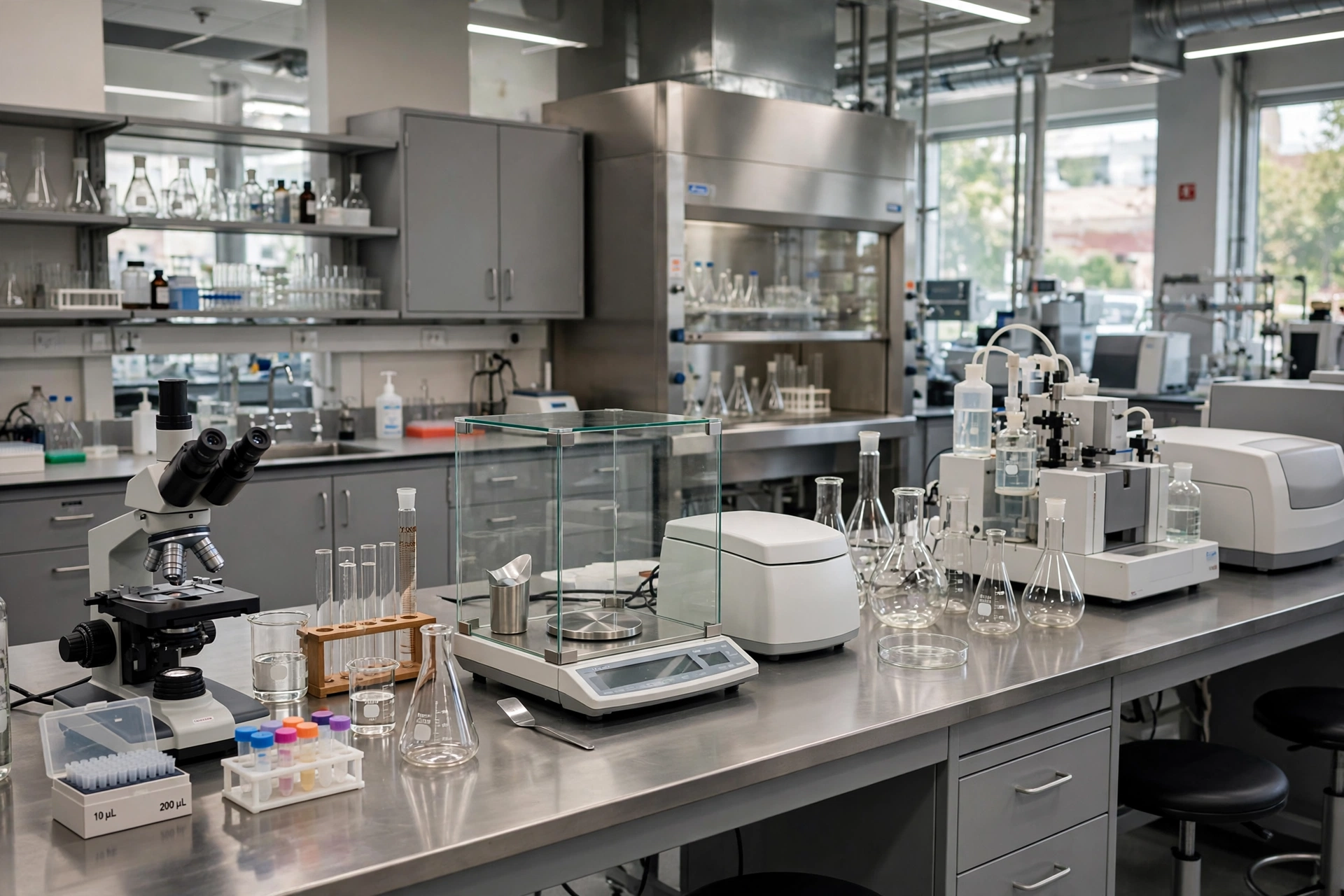
Asset finance can potentially fund a wide range of laboratory and life sciences equipment.
This includes:
- Autoclaves and sterilisation equipment
- Bioprocessing systems
- Centrifuges
- Climatic and environmental test chambers
- Clinical and diagnostic equipment
- Cold storage and laboratory refrigeration
- Furnaces
- Growth chambers
- HPLC and UPLC chromatography systems
- Incubators
- Laboratory furniture
- Laboratory software and LIMS systems
- Microscopes and imaging equipment
- Research and testing equipment
- Specialist scientific machinery
This isn’t an exhaustive list.
One of the challenges with laboratory finance is that the equipment can be highly specialist and may sit outside the type of assets a traditional high-street lender regularly deals with.
Working with a business finance broker can therefore be useful where an asset is unusual, highly technical or specific to a particular area of research.
Can You Finance a Full Laboratory Fit-Out?
Yes. Laboratory finance doesn’t necessarily have to cover only one machine.
Businesses may require funding for several pieces of equipment at once when:
- Opening a new laboratory
- Expanding into larger premises
- Increasing testing or production capacity
- Adding a new service or research capability
- Refurbishing an existing facility
- Replacing several ageing assets
Depending on the project and lender criteria, it may be possible to fund multiple elements of a laboratory project rather than using available cash to purchase each item individually.
This is particularly useful where equipment forms part of a wider business expansion and preserving working capital is important.
Leasing vs Hire Purchase for Laboratory Equipment
Two common ways of financing laboratory equipment are leasing and hire purchase.
Which is most appropriate will depend on the type of asset, how long you expect to use it and whether owning the equipment at the end of the agreement is important.
Leasing laboratory equipment
Leasing can be useful for specialist equipment that you may need to replace or upgrade as technology develops.
Rather than purchasing the equipment outright, the business pays for its use through regular rentals over an agreed term.
Depending on the type of lease and agreement, there may then be options available at the end of the term.
This can be attractive for laboratories using technology that develops quickly, where tying up a large amount of capital in one piece of equipment may not be desirable.
Hire purchase
Hire purchase can be more appropriate where a business wants to own the equipment eventually.
You spread the cost over an agreed term and, subject to the terms of the agreement and final payment, ownership ultimately passes to the business.
It can work well for long-life assets that the laboratory expects to use for many years.
Buying equipment outright
Buying outright removes the need for ongoing finance repayments but requires you to pay the entire purchase price upfront.
For lower-value equipment that may make sense.
For expensive laboratory equipment or a larger fit-out, however, businesses may prefer to retain that cash for other costs and spread the equipment investment over time.
There isn’t one structure that is automatically best for every laboratory. The most appropriate option will depend on the asset, business circumstances and plans for the equipment.
Financing Equipment for a New Laboratory or Life Sciences Start-Up
New laboratories can face particularly high upfront costs.
A facility may need several pieces of equipment before it is able to begin trading or generating revenue, alongside premises, staff, software and other set-up costs.
Equipment finance may be available to new-start businesses, but lenders assess applications differently from those of an established company with several years of trading history.
The lender may consider factors including:
- The experience of the directors
- Business plan and financial projections
- The equipment being purchased
- The amount being financed
- Deposit or upfront contribution
- Personal guarantees or other security
- The overall strength of the proposal
This means a business shouldn’t assume that having no trading history automatically prevents it from financing equipment — but equally, lenders don’t guarantee approval simply because the finance is linked to an asset.
Johnson Reed works with both established businesses and new starts, so we can look at the individual project and identify lenders willing to consider it.
Financing Equipment for an Established Laboratory
For an established life sciences, testing or diagnostics business, finance often supports growth rather than initial set-up.
For example, a business may want to:
- Add additional testing capacity
- Purchase more advanced equipment
- Replace ageing machinery
- Introduce a new service
- Expand into another facility
- Complete a laboratory refurbishment
Spreading the cost can allow the business to make the investment without using a large portion of its available cash in one transaction.
Can You Refinance Existing Laboratory Equipment?
In some circumstances, a business can also use equipment it already owns to release capital.
Equipment refinance can allow a business to raise funds against qualifying assets it already owns.
For laboratories with significant value tied up in specialist machinery, this may provide another source of working capital for expansion, new equipment or other business costs.
Eligibility and the amount available will depend on factors such as the type, age, value and condition of the equipment.
Can You Finance Used or Refurbished Laboratory Equipment?
Potentially, yes.
Businesses don’t always need the latest new equipment, particularly where a professionally refurbished or used asset meets the required specification.
Finance may be available for used and reconditioned laboratory equipment, although lender appetite can depend on factors such as:
- Age of the equipment
- Purchase price
- Supplier
- Expected working life
- Condition
- Resale value
If you’re considering used equipment, it’s worth checking whether finance is available before committing to the purchase.
How Does Laboratory Equipment Finance Work?
The exact process depends on the business, equipment and amount required, but it will usually begin with details of both the applicant and the asset you are purchasing.
A lender may ask for information such as:
- Business details – including trading history and ownership.
- Equipment details – what you’re purchasing, its cost and the supplier.
- Financial information – depending on the size and nature of the application.
- Funding structure – including the preferred term and whether leasing or hire purchase is being considered.
- Credit assessment – the lender reviews the overall proposal before making a decision.
As a broker, Johnson Reed can approach a panel of independent funders rather than relying on the lending criteria of one provider.
This can be particularly useful with specialist scientific equipment, where different funders may have very different appetites for the same asset.
You can also use our business finance calculator to get an indication of what repayments could look like before making an enquiry.
How Long Can You Finance Laboratory Equipment For?
Finance terms vary according to the equipment, lender and individual business.
When choosing a term, it’s worth considering how long you realistically expect the equipment to remain useful.
A longer term can reduce monthly repayments, but it may not always make sense to finance technology over a period that extends beyond its expected working or technological life.
For equipment likely to become outdated relatively quickly, a shorter term or leasing structure may be worth considering.
For durable equipment expected to remain in use for many years, a different structure may be more appropriate.
What Should You Consider Before Financing Lab Equipment?
Before arranging finance, think about more than just the monthly repayment.
Consider:
- How long will you use the equipment?
- Will the technology need upgrading regularly?
- Do you ultimately want to own the asset?
- Is the equipment new, used or refurbished?
- Will the investment increase capacity or create a new revenue stream?
- Would paying cash significantly reduce working capital?
- Are other elements of the project also being funded?
Matching the finance structure to the equipment and wider project is just as important as finding the funding itself.
Laboratory Equipment Finance with Johnson Reed
Johnson Reed has been helping UK businesses fund equipment and investment for more than 20 years.
For life sciences businesses, we can help arrange finance for anything from an individual specialist instrument to equipment for a larger laboratory fit-out or refurbishment.
Working with a panel of independent funders means we can assess different funding options rather than rely on a single lender.
Whether you’re opening a new laboratory, expanding an existing facility or investing in new scientific technology, our team can help you understand the options available.
Explore our Life Sciences Finance page or get in touch with the Johnson Reed team to discuss the equipment you’re looking to fund.
Frequently Asked Questions
Can a start-up get laboratory equipment finance?
Potentially. Some lenders will consider equipment finance for new-start businesses, although the assessment is usually more detailed because there is limited or no trading history. The lender may consider the strength of the business plan, directors’ experience, equipment, deposit and any available security.
Can I finance one piece of laboratory equipment?
Yes. You can use equipment finance for individual items as well as larger equipment purchases or laboratory projects, subject to lender criteria.
Can you finance a whole laboratory fit-out?
Potentially. Finance can cover multiple pieces of equipment and, depending on the structure of the project, other qualifying elements of a laboratory refurbishment or fit-out.
Can you finance used laboratory equipment?
In many cases it can. The lender will usually consider the equipment’s age, condition, value, supplier and expected remaining working life.
Is leasing or hire purchase better for laboratory equipment?
It depends on the equipment and your plans for it. Leasing may suit assets likely to require regular upgrading, while hire purchase may be appropriate when you intend to keep and ultimately own the equipment.
Can I refinance laboratory equipment I already own?
Potentially. Equipment refinance can release capital from qualifying assets already owned by a business, subject to the lender’s valuation and eligibility criteria.