






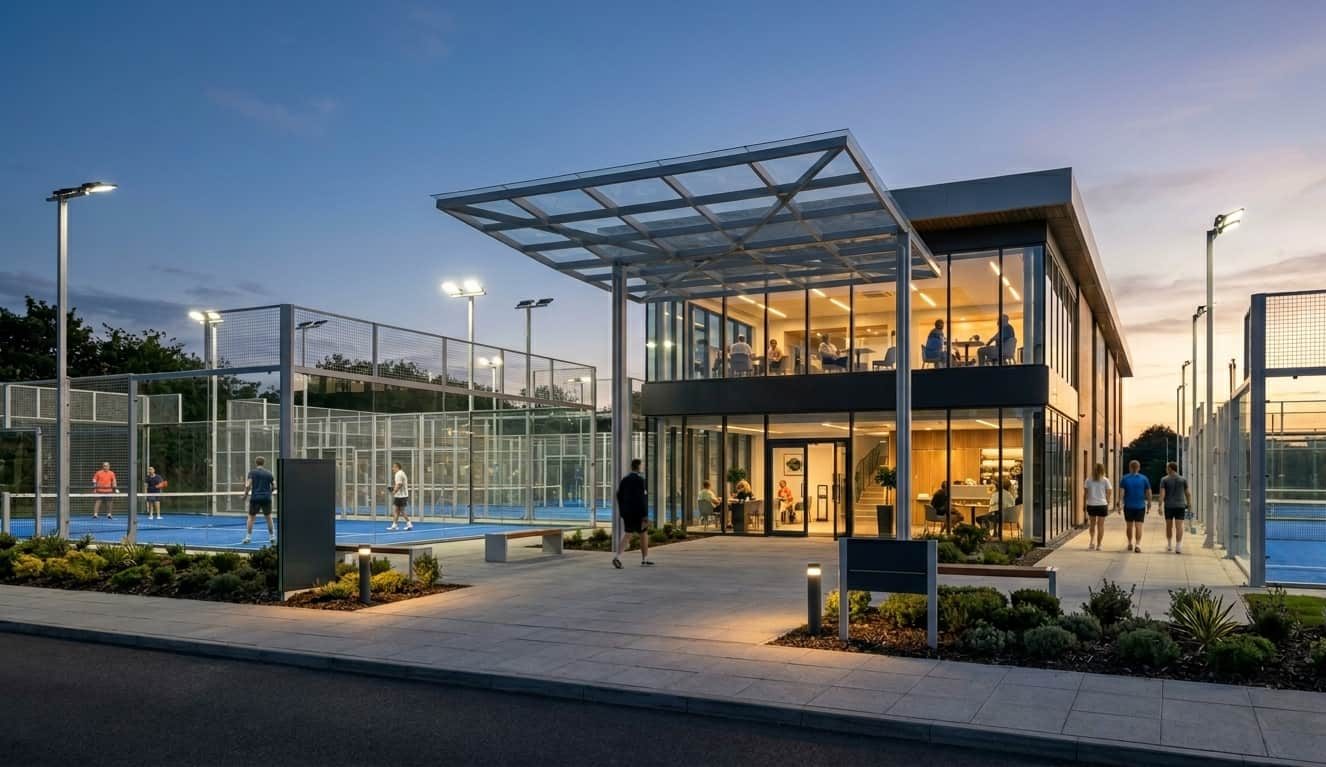
Padel continues to grow in popularity across the UK, creating opportunities for sports clubs, leisure operators and entrepreneurs looking to invest in new facilities.
The challenge is often the upfront cost. By the time you’ve factored in the courts themselves, installation, surfacing, fencing, lighting, and site preparation, the total investment can quickly reach six figures.
For many businesses, the question is not whether to invest in padel, but how to fund the project without putting unnecessary pressure on cash flow.
This guide looks at typical padel court costs, potential revenue opportunities, and the finance options available to UK businesses considering a new padel facility.
What Does a Padel Court Cost?
The cost of installing a padel court will vary depending on the specification of the project.
Factors such as whether the court is indoor or outdoor, the type of surfacing used, lighting requirements, and site preparation work can all influence the final cost.
For operators building multiple courts, costs can increase significantly once groundworks, fencing, spectator areas, and supporting facilities are included.
For a more detailed look at planning considerations, setup costs, and what is involved in launching a facility, see our guide to setting up a padel court business in the UK.
While some operators choose to fund projects outright, many prefer to preserve working capital and spread the cost through a finance agreement.
What Revenue Can a Padel Court Generate?
Revenue will vary depending on location, pricing and utilisation, but many operators charge between £20 and £40 per court per hour.
As a simple illustration, a court charging £30 per hour and achieving an average of four booked hours per day would generate around £43,800 in annual court revenue. At six booked hours per day, that increases to approximately £65,700 per year.
These figures are intended as a guide only and should not be treated as a guarantee of performance. Actual revenue will depend on factors including local demand, competition, pricing strategy, operating hours, and occupancy levels.
Many operators also generate additional income through coaching sessions, memberships, competitions, equipment sales, and food and beverage facilities where available.
Understanding Potential ROI:
One reason many investors are attracted to padel is the potential to generate revenue from a relatively compact footprint.
A well-used court can create income throughout the day while typically requiring lower staffing levels than some other leisure activities.
However, court revenue is only part of the picture. Operators should also consider:
- Rent or lease costs
- Business rates
- Insurance
- Court maintenance
- Lighting and utilities
- Booking software
- Marketing and promotion
- Staffing costs
Before committing to a project, it is important to build realistic forecasts based on expected occupancy rather than best-case scenarios.
Funding a Padel Court Project:
For many businesses, finance provides a way to spread the cost of a project while preserving cash reserves for other areas of the business.
The most common funding options are leasing and hire purchase.
Leasing allows businesses to spread costs over fixed monthly payments without necessarily taking ownership of the asset. This can appeal to operators looking to keep upfront costs low and maintain flexibility.
For businesses planning to retain the courts for the long term, hire purchase may be an alternative option. Under a hire purchase agreement, ownership transfers to the business once all payments have been completed.
For operators considering leasing more broadly, our guide to lease financing as a finance option explains the key considerations in more detail.
Businesses weighing up ownership against financing may also find our guide to equipment loans vs buying useful when evaluating the wider implications of each approach.
Tax Considerations:
The tax treatment of leasing and hire purchase can differ, which is why professional advice is always recommended before making a decision.
Depending on the finance structure selected, businesses may be able to claim tax relief on repayments or benefit from capital allowances on qualifying assets.
Our guide to the tax benefits of leasing equipment in the UK explains some of the key considerations in more detail.
What Lenders Look For?
When reviewing a padel court finance application, lenders will typically assess the overall financial position of the business.
For established businesses, this often includes:
- Business bank statements
- Trading performance
- Director credit profiles
For newer businesses, lenders may place greater emphasis on the business plan, projected revenue, market demand, and management experience.
Providing clear and realistic information can help improve the range of funding options available.
Common Mistakes to Avoid
One of the most common mistakes is focusing solely on the cost of the courts themselves.
In reality, projects often involve a range of additional costs, including groundworks, lighting, fencing, planning requirements, booking systems, and marketing.
Another common mistake is leaving finance discussions too late. Exploring funding options before signing contracts or committing to major expenditure can provide more flexibility and allow time to compare different solutions.
Finally, it is important to ensure any projections are realistic. Overestimating occupancy levels can create challenges later if demand takes longer to build than expected.
For a broader overview of the funding process, see our guide to financing a padel court in the UK.
Frequently Asked Questions
What is padel court leasing in the UK?
Padel court leasing allows businesses to spread the cost of installing padel courts through fixed monthly payments rather than paying the full amount upfront.
How much does a padel court cost in the UK?
Costs vary depending on the specification, location, and scale of the project. Factors such as surfacing, lighting, fencing, and site preparation can all influence the overall investment required.
What revenue can a padel court generate?
Revenue varies considerably between locations and operators. Factors such as court pricing, occupancy levels, operating hours and additional services will all influence performance.
Can a start-up business finance padel courts?
Some lenders will consider start-up businesses, although additional information such as business plans and financial forecasts may be required.
Can installation costs be included in the finance?
In many cases, installation and associated project costs can be incorporated into a finance package, subject to lender criteria.
How long do padel court finance agreements typically run?
Terms commonly range between three and seven years, although this will vary depending on the lender and project.
Do I need to own the site?
Not necessarily. Many operators install and finance courts on leased premises. Lenders will assess the overall project and business case rather than requiring freehold ownership.